
CapCut Video Editing: Master Basic & Advanced Techniques for Beginners
Welcome to the ultimate guide for mastering CapCut video editing! Whether you’re a complete beginner or looking to refine your skills, this comprehensive tutorial will walk you through every essential step to transform your raw footage into polished, professional-looking videos. CapCut makes video editing accessible and fun, and by the end of this guide, you’ll be editing like a pro.
Before You Start: Setting Up CapCut
CapCut offers a powerful yet intuitive platform for video editing. To get started, you’ll need to create an account. CapCut is available for free, with an optional Pro upgrade that unlocks additional features and benefits.
- Sign Up for CapCut: Visit the official CapCut website and sign up for a free account. If you’re considering CapCut Pro, keep an eye out for any available deals during your signup process.
- Create a New Project: Once logged in, click the prominent blue “Create project” button to begin your editing journey.
Understanding the CapCut Interface
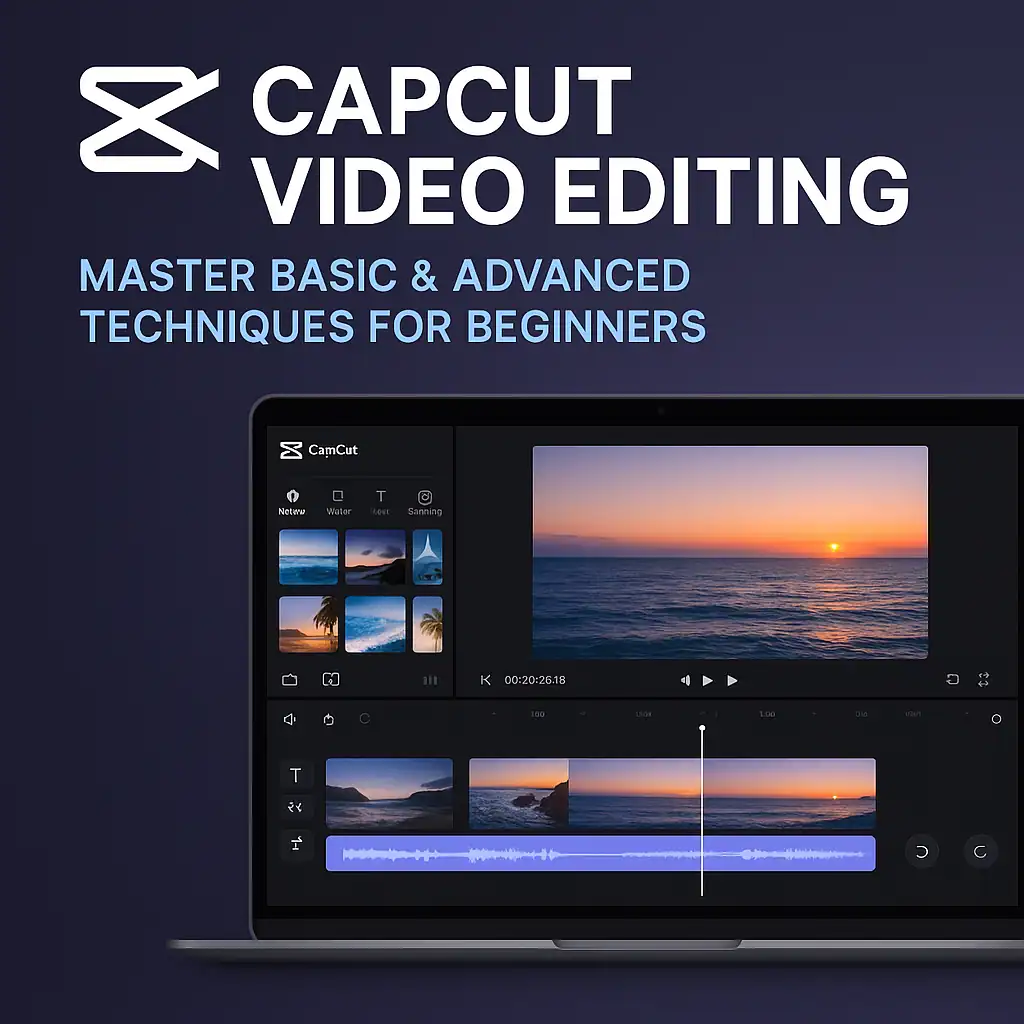
Upon creating a new project, you’ll be greeted by CapCut’s main interface. Let’s familiarize ourselves with its key components:
- Media Panel (Left-hand side): This is your central hub for importing all your video footage, photos, and music. It features various tabs that we’ll explore shortly.
- Player (Center of the screen): The Player allows you to preview your video in real-time as you make edits, ensuring you see exactly how your changes affect the final output.
- Details Panel (Right-hand side): Here, you’ll find essential project information such as your project name, aspect ratio, resolution, and other settings. Click the “Modify” button to adjust these settings, including renaming your project, changing the aspect ratio, resolution, frame rate, and color space.
- Timeline (Bottom of the screen): This is where the magic happens! All your editing, from trimming clips to adding effects, will take place on this horizontal track.
Step-by-Step CapCut Video Editing Guide
1. Importing Your Footage
The first step in any video project is bringing in your raw materials.
- Access the Media Panel: In the Media panel on the left, click on the import area or the “Import” button.
- Select Your Clips: Navigate to the folder containing your video clips. You can select multiple clips by holding down
Shiftand clicking on the first and last clips you wish to import, or by holdingControl(orCommandon Mac) and clicking individual clips. - Add to Media Bin: Click “Open” to add the selected clips to your media bin within CapCut.
2. Adding Clips to the Timeline
Once your clips are in the media bin, it’s time to arrange them on your timeline.
- Method 1: Using the Plus Button: Hover over a clip in your media bin and click the blue plus (
+) button that appears. This will add the clip to your timeline. - Method 2: Drag and Drop: For greater control, simply drag and drop your selected clips from the media bin directly onto the timeline. You can drag them individually or select multiple clips and drag them all at once.
3. Navigating and Zooming the Timeline
A clear view of your timeline is crucial for precise editing.
- Zoom In/Out with Keyboard:
- Hold down
Control(orCommandon Mac) and press the+key to zoom in. - Hold down
Control(orCommandon Mac) and press the-key to zoom out.
- Hold down
- Zoom In/Out with Mouse Wheel (Recommended):
- Hold down
Control(orCommandon Mac) and scroll up on your mouse wheel to zoom in. - Hold down
Control(orCommandon Mac) and scroll down on your mouse wheel to zoom out.
- Hold down
4. Trimming Your Clips
Trimming is fundamental to remove unwanted footage and tighten your video.
Understanding the Playhead
Your playhead is the white vertical marker in your timeline. It indicates your current position in the video, and you can drag it to scrub through your footage in the Player.
Trimming Methods:
- Splitting Clips:
- Position your playhead at the desired trim point.
- Click the “Split” icon (a small scissor icon) in the timeline toolbar, or simply press
Control + B(orCommand + Bon Mac). This divides your clip into two segments. - Select the unwanted segment and press the
Deletekey on your keyboard.
- Dragging Clip Edges:
- Hover your mouse over the beginning or end of a clip on the timeline. Your cursor will change to a double-headed arrow.
- Click and drag the edge inwards to shorten the clip (trimming off the beginning or end) or outwards to extend it.
- Using Q and W Keys:
- Position your playhead at the desired trim point.
- Press
Qto delete everything on the left side of the playhead. - Press
Wto delete everything on the right side of the playhead.
5. Essential Timeline Tools
Beyond trimming, CapCut offers a suite of tools directly on your timeline toolbar:
- Undo/Redo: Standard buttons to reverse or reapply actions.
- Split (
Control + B/Command + B): Divides a clip at the playhead’s position. - Delete: Removes selected clips or segments.
- Marker Tool: Click to place markers on your footage or timeline, useful for noting specific points for future edits or actions.
- Freeze Frame: With a clip selected, click this to create a still image from the current frame of your clip.
- Reverse: Reverses the playback direction of the selected clip.
- Mirror: Flips the selected clip horizontally.
- Rotate: Rotates the selected clip.
- Crop: Allows you to adjust the visible area of your footage, cropping out unwanted parts of the frame.
6. Adding Transitions
Transitions smoothly connect your clips, preventing abrupt cuts.
- Access Transitions: Click on the “Transitions” tab at the top of the interface.
- Preview Transitions: Hover your mouse over different transition options to see a live preview of how they will look.
- Apply Transition: Once you find a transition you like, drag it from the Transitions panel and drop it between two clips on your timeline.
- Adjust Transition Duration: Select the transition on your timeline. In the Details panel on the right, you can adjust its duration (e.g., from 1 second to 0.5 seconds) to make it faster or slower.
7. Adjusting Clip Framing and Position
Fine-tune the visual composition of your shots.
- Select the Clip: Click on the clip in your timeline that you wish to adjust.
- Adjust Scale (Zoom): In the Details panel on the right, locate the “Scale” slider. Drag it to the right to zoom in on your video or to the left to zoom out.
- Adjust Position: Use the “Position” sliders in the Details panel to move your video horizontally or vertically. Alternatively, you can directly click and drag the video within the Player window. Blue rulers will appear to help you center the video vertically and horizontally.
Frequently Asked Questions (FAQ)
Here are some common questions about CapCut video editing:
- Is CapCut completely free to use?
CapCut offers a robust free version with many features. There is also a CapCut Pro subscription that unlocks additional advanced tools and assets. - Can I add music and sound effects in CapCut?
Yes, CapCut has dedicated sections in the Media panel for importing and adding music and sound effects to your timeline. You can also adjust their volume and duration. - How do I export my finished video from CapCut?
Once your video is complete, look for an “Export” or “Share” button, usually in the top right corner. You’ll be able to choose your resolution, frame rate, and format before saving. - Does CapCut support different aspect ratios for various platforms?
Absolutely! In the Details panel, under project settings, you can easily change your project’s aspect ratio to suit platforms like TikTok (9:16), Instagram (1:1), or traditional video (16:9). - What if my computer is slow when editing in CapCut?
Video editing can be resource-intensive. Try closing other applications, ensuring your graphics drivers are updated, or reducing the preview quality in CapCut’s settings if available.
Conclusion
You’ve now learned the essential techniques for CapCut video editing, from setting up your project and importing footage to trimming clips, adding transitions, and adjusting framing. CapCut’s intuitive interface and powerful tools empower you to create compelling videos with ease. Continue practicing these techniques, explore CapCut’s other features like effects, text, and audio adjustments, and soon you’ll be producing professional-quality content. Happy editing!